How to Start Chair Yoga at Home After 60
If you want to start chair yoga at home, don’t begin with stretches. Begin with the chair. A solid dining chair or straight-backed chair is usually better than a soft armchair, rolling office chair, or anything that sinks when you sit down. You want your feet flat on the floor, your knees bent at about a right angle, and enough room around you to move your arms without smacking a lamp. If the floor is slippery, place the chair on a yoga mat or non-slip surface so it stays put.
A few small details make a big difference, especially with home yoga for seniors. Wear clothes you can move in without fussing with them. Keep water nearby. If you use hearing aids or glasses and they help you follow movement more comfortably, keep them on. And if balance is a concern, position the chair near a wall for extra confidence. The goal is not to create a cute workout corner for social media. The goal is to make the space feel safe enough that you’ll actually come back tomorrow.
Know What Chair Yoga Can Do for You—and What It Shouldn’t Feel Like
Chair yoga after 60 is usually less about chasing flexibility and more about improving the things that affect daily life: getting up from a chair, reaching overhead, turning your neck without stiffness, breathing more fully, and feeling steadier on your feet. Done consistently, it can help with mobility, posture, circulation, gentle strength, and body awareness. That matters. A lot of people think they need a hard workout to count as exercise, but for senior fitness, steady and repeatable often beats intense and sporadic.
Here’s the thing: chair yoga should feel mild to moderate, not punishing. A stretch is fine. Joint pain, pinching, dizziness, or breath-holding is not. If you have osteoporosis, recent surgery, uncontrolled blood pressure, severe arthritis, vertigo, or heart concerns, it’s smart to get medical clearance before starting. That’s not fear-mongering. It’s just common sense. You want movements that help your body trust movement again, not a routine that leaves you sore, wobbly, or annoyed enough to quit.
Start With a 10-Minute Beginner Routine You Can Actually Stick To
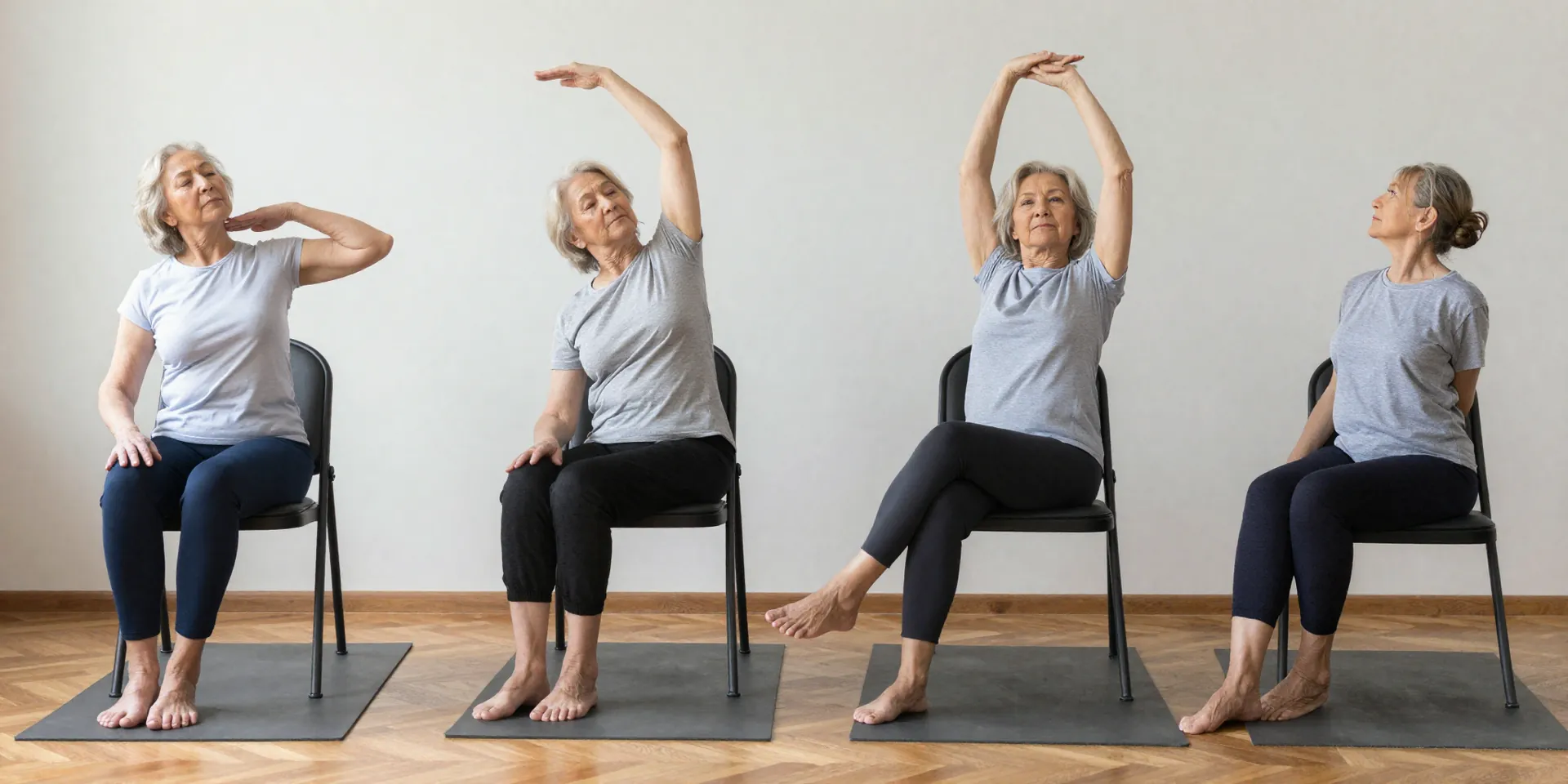
The best beginner routine is simple enough to remember. Try this: sit tall near the front of your chair with both feet grounded. Take five slow breaths, letting your ribs expand instead of lifting your shoulders. Then do gentle neck turns right and left, followed by shoulder rolls. Add seated cat-cow by tipping the pelvis forward and back while the chest opens and softens. After that, march the feet lightly, extend one leg at a time, circle the ankles, and finish with an easy overhead reach if your shoulders allow it. Ten minutes. That’s enough for day one.
If you want a little more structure, think in this order: breathe, warm up, mobilize, strengthen, calm down. For gentle strengthening, try pressing your feet into the floor, squeezing your shoulder blades together, or sitting tall and slowly standing up from the chair once or twice if that feels safe. For a cool-down, rest your hands on your thighs and take a few slower breaths. No need to turn it into a 45-minute production. The real win is building a routine you can repeat four or five times a week without talking yourself out of it.
Use Simple Form Cues So the Movements Help Instead of Aggravate
Good form in chair yoga is pretty basic, but it matters. Keep both feet planted unless the movement asks you to lift one. Sit tall without going stiff. Think long spine, soft jaw, relaxed shoulders. When you raise your arms, stop before your back arches or your neck tightens. When you twist, rotate through the upper back and ribs instead of wrenching the low back. Slow is better than big. A small movement done cleanly usually helps more than a dramatic one done with strain.
Breathing is another big one. People often hold their breath when they concentrate, especially if a move feels unfamiliar. Don’t. Try inhaling during opening or lifting movements and exhaling during rounding or effort. If a pose makes you stop breathing normally, it’s too much right now. Also, pain is not a sign that you’re finally “doing it right.” That old no-pain-no-gain mindset is especially unhelpful in chair yoga after 60. You’re trying to improve function and confidence, not win a toughness contest in your living room.
Make It a Habit by Keeping the Bar Low and the Routine Flexible
A lot of people quit because they make the plan too big. They decide senior fitness now means a full program, special gear, daily tracking, maybe a playlist, maybe a perfect schedule. Then life happens and the whole thing collapses. Better approach: attach chair yoga to something you already do. After breakfast. Before the evening news. Right after your morning medication. When the habit is anchored to an existing part of the day, it stops feeling like one more task you forgot to be good at.
Give yourself an easy minimum. Five or ten minutes counts. So does doing only the breathing and shoulder work on a stiff day. The point is consistency, not perfection. Some days you’ll feel surprisingly loose and energetic. Other days your hips, knees, or back will argue with every move. Adjust. That flexibility is part of the practice. If you keep showing up, home yoga for seniors gets easier to trust. You start noticing that getting out of bed feels less creaky, reaching for a shelf feels less awkward, and your body stops feeling like a problem that needs to be managed every minute.
Watch for Red Flags, and Know When to Progress Beyond the Basics
There are a few signs you need to pull back or get guidance. Stop if you feel chest pain, sudden shortness of breath, dizziness, numbness, or sharp pain. If a certain movement repeatedly irritates the same joint, skip it for now instead of trying to push through. And if you have trouble sitting upright without strain, it may help to place a folded towel behind the low back or work with shorter sessions at first. Small adjustments are normal. They’re not cheating.
Once the basic routine feels familiar, progress can stay gentle. Hold movements a bit longer. Add another round of leg extensions or seated marches. Practice standing up from the chair and sitting down with control. Try a supported heel raise while holding the chair back. That’s how chair yoga after 60 becomes more than stretching—it starts supporting balance, leg strength, and everyday independence. No dramatic leap required. Just steady practice, good judgment, and a chair that doesn’t wobble.