Chair Yoga for Seniors with Neuropathy: Safe Tips for Numb Feet
If your feet feel numb, tingly, burning, or oddly disconnected from the floor, regular exercise advice can sound ridiculous. Walk more. Stretch more. Push through it. That usually comes from people who do not understand what neuropathy feels like at 7 a.m. when your feet are half asleep and your balance is not trustworthy. Chair yoga for neuropathy makes sense because it gives you movement without demanding that your feet do all the work. You get circulation, joint motion, and a chance to wake up the lower legs while staying supported.
That matters for seniors because numb feet exercises need to be safe before they are impressive. A chair gives you a stable base, which means you can focus on small, deliberate movements instead of worrying about tipping over. It is also easier to notice what your feet are doing when you are seated. Can you spread your toes a little? Can you point and flex without cramping? Can you feel pressure evenly through both feet? Those details are easy to miss when you are standing. Safe seated movement strips things down and lets you rebuild control one simple motion at a time.
Set up your chair and feet so the movements actually help
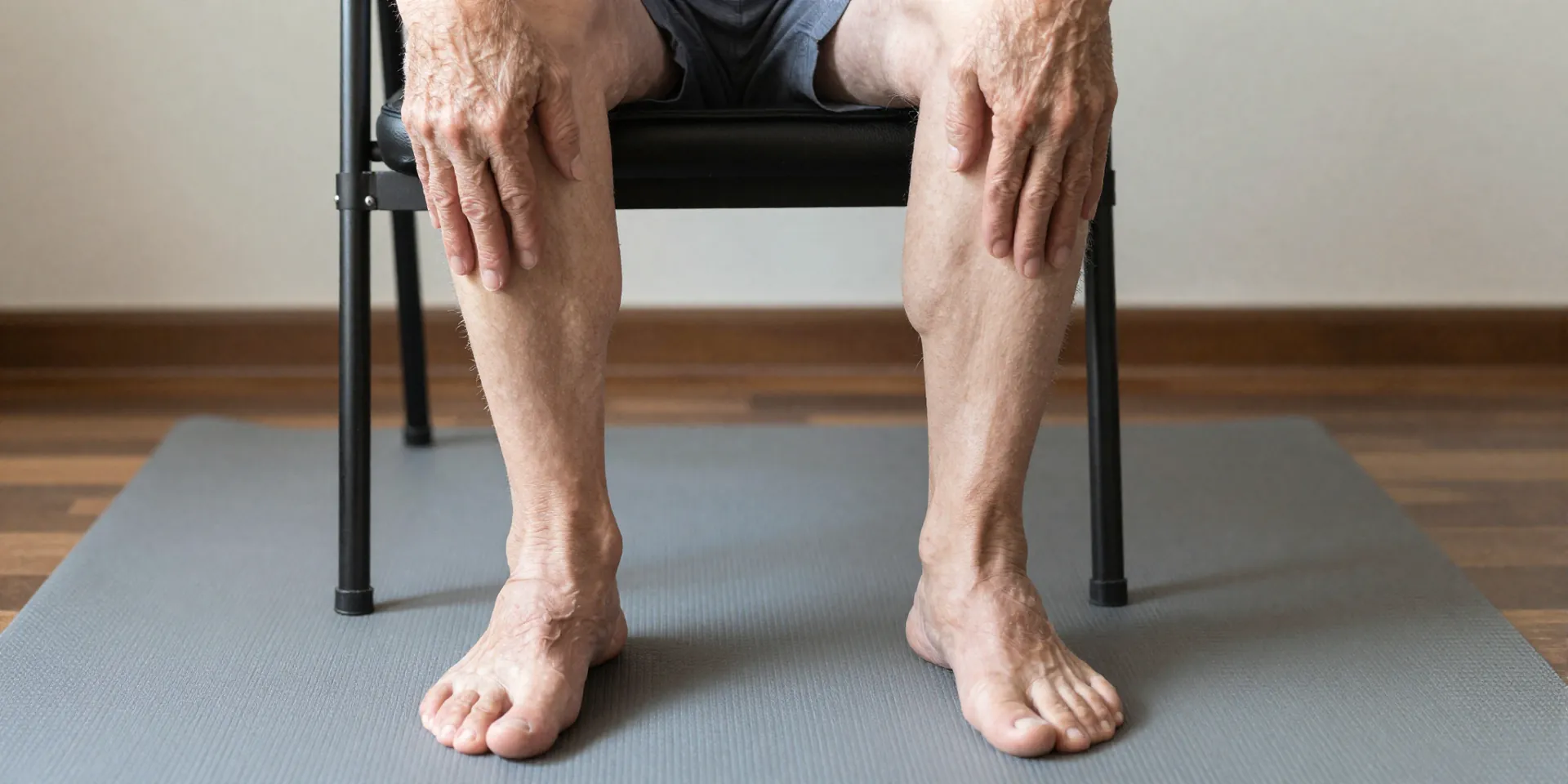
Before you start, use a sturdy chair that does not roll or sink. Kitchen chair beats recliner. Put both feet on the floor or on a nonslip mat. Sit tall, but not stiff, with your back away from the chair if you can manage it comfortably. Knees roughly over ankles. If one foot barely reaches the floor, slide a folded towel or yoga block underneath it. This is not just about posture. It changes how your ankles move and how clearly your brain reads pressure from the feet.
Here is the part many people skip: check the sensation level before you move. If your feet are very numb, look at them while you exercise. Visual feedback helps when nerve feedback is weak. Wear thin socks or go barefoot if that feels safe at home, because thick slippers can dull sensation even more. And do not chase a big stretch. For senior foot mobility, small ranges are often better. Smooth circles, gentle lifts, careful toe work. You are not trying to prove anything. You are trying to create cleaner signals between your feet, ankles, and brain without irritating already sensitive nerves.
The best numb feet exercises to do seated without aggravating symptoms
Start with ankle pumps. Point your toes away, then pull them back toward your shins. Slow. Ten to fifteen reps. This is one of the simplest numb feet exercises, and it helps with circulation and ankle mobility without much strain. Next, try heel-toe rocks while seated: keep your heels down and lift the front of the feet, then keep your toes down and lift the heels. If one side moves less, that is useful information, not failure. Follow that with ankle circles in both directions. Make them small enough that the movement feels controlled instead of sloppy.
Then give your toes some attention. Lift all ten toes if you can, then relax. Spread them gently. If they barely move, no surprise. Neuropathy can make toes feel like they belong to somebody else. Keep going without forcing. Another good one is the seated march with a foot focus: lift one knee slightly, set the foot down carefully, then switch sides, paying attention to how the sole contacts the floor. Finish with a calf stretch from the chair by sliding one foot a little forward, keeping the heel down, and hinging your chest slightly over the thigh. Mild stretch only. Sharp pain, cramping, or more tingling means back off.
How to use breathing and upper-body movement to wake up the lower half
Feet do not work in isolation. If your posture collapses and your breathing gets shallow, everything below the knees tends to tighten or go dull. A surprisingly useful trick is to pair foot movement with easy upper-body motion. Try this: inhale and gently lift your arms to shoulder height while pressing your feet into the floor. Exhale and lower your arms while relaxing the toes. Or sit tall and do a soft twist to each side, then come back to center and do ankle pumps. It sounds simple because it is simple. But it helps your nervous system pay attention to the whole chain, not just the problem area.
This is where chair yoga for neuropathy starts to feel less like random exercises and more like a real practice. Breathing slows the pace down, which is good for anyone who gets frustrated by numbness. Quick, jerky movement usually makes things worse. Steady breathing gives you a rhythm, and rhythm helps movement become more coordinated. If you are dealing with both numb feet and stiffness in the hips or lower back, add seated cat-cow, shoulder rolls, or a gentle side bend between foot drills. Better spinal movement can improve how easily you sit upright, and that changes how weight travels through your legs and feet.
Safety rules that matter more than doing every pose perfectly
Neuropathy changes the usual rules. If you cannot feel your feet clearly, you also may not notice when a position is awkward, when a toe is jammed under, or when pressure is building in one spot. So look at your feet often. Pause between exercises. If swelling increases, burning ramps up, or your feet feel more irritated afterward instead of gently warmed up, that session was too much. Scale back the range, the reps, or the time. More is not automatically better here.
A few practical points. Keep the floor clear. Do not close your eyes during balance-related seated work if dizziness or numbness is an issue. If you have diabetes, check your feet before and after practice for redness, rubbing, or skin changes, especially if you exercised barefoot. If one leg is much weaker, work both sides but let the weaker side set the pace. And if seated movement triggers sudden pain, significant cramping, or a dramatic change in sensation, stop and talk to your clinician or physical therapist. Safe seated movement is supposed to make daily life easier, not leave you feeling rattled.
A realistic weekly routine for senior foot mobility that you will actually keep doing
The best routine is the one you do often enough for your body to recognize it. For most seniors, five to ten minutes is a strong starting point. Try this: ankle pumps, heel-toe rocks, ankle circles, toe lifts, seated marching, then one gentle calf stretch per side. Add a little arm movement and slow breathing if you like. Do that four or five days a week instead of doing a heroic thirty-minute session once and avoiding it for the next nine days. Neuropathy responds better to steady input than to occasional bursts of effort.
You can also anchor the routine to parts of the day when numbness is worst. Morning stiffness? Do it before breakfast. Feet feel strange after sitting too long? Use it as an afternoon reset. If balance makes you nervous when getting up from a chair, practice pressing both feet into the floor for a few breaths before standing. That tiny habit can make transitions feel more secure. Senior foot mobility is rarely about dramatic transformation. It is about walking to the kitchen with a little more confidence, noticing the floor better, and keeping the joints and nerves from getting even more stubborn than they already are.